

Commercial Dosa Plate vs Hot Plate: Which One Does Your Kitchen Need?

Updated: Sep 30
A commercial dosa plate and a commercial hot plate can look similar because both use a heated metal surface, but they are designed around different kitchen workloads. A dosa plate prioritises a broad, stable cooking area for repeated batter spreading, while a hot plate is usually chosen for greater menu flexibility across burgers, sandwiches, eggs, vegetables, snacks and other restaurant items.
For a restaurant owner, the decision should be based on peak-hour menu mix, plate size, heat recovery, operator workflow and how much of the cooking line can be dedicated to one category. This 2026 comparison explains where each machine fits and when one can reasonably substitute for the other.

What Is a Commercial Dosa Plate?
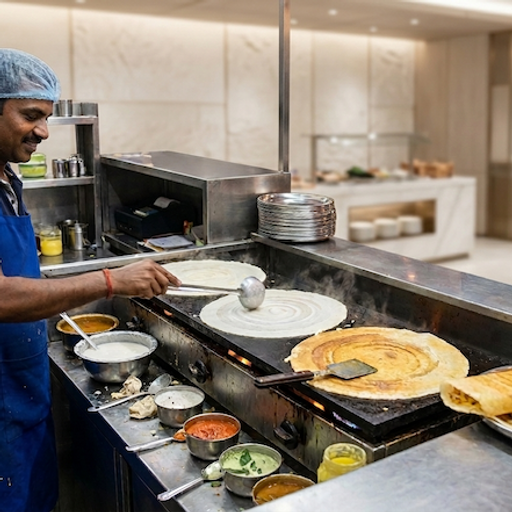
A commercial dosa plate is a large flat cooking station built for dosa, uttapam and other tawa-based foods. Its main advantage is usable surface area. The chef needs enough room to pour batter, spread it into a thin circle, control browning, add fillings and remove the dosa without interfering with the next order.
In a busy South Indian restaurant, thermal stability matters as much as size. Every portion of cool batter temporarily pulls heat from the plate. A well-specified dosa plate uses adequate plate mass and burner coverage so the surface returns to operating temperature quickly instead of producing pale, uneven or slow-cooking dosas.
What Is a Commercial Hot Plate?
A commercial hot plate is a more general-purpose cooking station used for direct-contact cooking across a range of restaurant menus.For restaurants that require a dedicated station for Indian breads, a chapati puffer plate can be a suitable option for high-volume preparation.Many restaurants choose a hot plate for restaurant operations because it provides flexibility for burgers, sandwiches, breakfast items and other menu categories.
Depending on configuration, it can be used for burger patties, sandwiches, eggs, pancakes, parathas, vegetables, cutlets and other foods that benefit from a heated flat surface.
If you are still comparing flat cooking equipment more broadly, read our commercial hot plate vs commercial griddle guide. It explains the differences in cooking surface, applications, capacity, cleaning and space requirements.
Dosa Plate vs Hot Plate: Main Differences
The practical difference is specialisation versus flexibility. A dosa plate is built around wide-surface repetitive production, while a hot plate is usually expected to support several menu categories throughout the day.
Comparison Point | Commercial Dosa Plate | Commercial Hot Plate |
Surface size | Usually broad and elongated so chefs can spread and cook several dosas in sequence or simultaneously. | Available in compact to larger formats and generally selected for mixed flat-surface cooking. |
Temperature | Optimised for stable, even surface heat so batter cooks consistently across a wide area. | Often designed for flexible temperature control across different foods and service tasks. |
Plate thickness | Often uses a heavier plate to improve thermal stability during repeated batter loading. | Thickness varies by model and application; heavier plates favour heat retention while lighter plates preheat faster. |
Cooking applications | Dosa, uttapam, tawa items, certain flatbreads and other repetitive large-surface cooking. | Burgers, sandwiches, eggs, vegetables, cutlets, pancakes, parathas and mixed restaurant production. |
Restaurant type | Best aligned with South Indian restaurants, dosa counters, canteens and high-volume breakfast operations. | Useful across cafés, QSRs, hotels, cloud kitchens, food stalls and multi-cuisine restaurants. |
Which Is Better for Making Dosa?
For a kitchen where dosa is a core product, the commercial dosa plate is usually the stronger choice. A larger dedicated surface gives the chef space to spread batter properly, maintain spacing between products and keep production moving during breakfast and dinner peaks.
Dedicated equipment also makes workflow easier. The cook can keep oil, batter, masala and spatulas organised around one station without sharing the surface with burger patties, eggs or other foods. This supports consistency and helps simplify allergen and flavour management.
Can You Cook Dosa on a Commercial Hot Plate?
Yes. A commercial hot plate can cook dosa if the surface is flat, large enough and capable of holding an even temperature. This can work well in cafés, hotels, cloud kitchens and multi-cuisine restaurants where dosa appears on the menu but does not dominate peak-hour orders.
The limitation is throughput. A compact hot plate may have enough room for one or two dosas but can become a bottleneck when several orders arrive together. Before using one as your main dosa station, compare the usable width, recovery time and actual number of dosas your chef can prepare per cooking cycle. For broader sizing guidance, see our best hot plate for a restaurant kitchen guide.
Which Is Better for Burgers and Sandwiches?
A commercial hot plate is normally the more suitable choice for burgers and sandwiches. Fast-food kitchens benefit from a surface that can be divided into zones for patties, onions, buns, eggs and vegetables while still allowing quick scraping and resetting between batches.
For burger-focused operations, our burger hot plate commercial griddle guide covers surface size, heat recovery, grease management and production planning in more detail.

Which Is More Versatile?
The commercial hot plate is generally more versatile. It can support breakfast, fast-food, snack and multi-cuisine menus from one compact station. That flexibility is valuable in cafés, food courts, hotel kitchens and cloud kitchens where equipment has to earn its space across several dayparts.
The dosa plate is more specialised, but specialisation is not a disadvantage when the menu demands it. A restaurant selling large volumes of dosa can gain more from a wide dedicated tawa than from a smaller multi-purpose plate that is constantly at full capacity.
Plate Thickness and Heat Distribution
Plate thickness influences thermal mass. A heavier plate stores more heat and normally experiences a smaller temperature drop when cold batter or food is loaded, but it also takes longer to preheat and requires sufficient burner or heating capacity underneath.
Heat distribution is equally important. A thick plate with poorly arranged burners can still develop weak zones. For dosa, uneven surface temperature may produce inconsistent colour and crispness across the same product. For burgers, it can create different cooking times across the plate. Ask for the plate material, thickness, burner layout and recommended operating range rather than comparing thickness alone.
Choosing Equipment Based on Your Menu
Start with your peak hour, not your total daily sales. List the products that must use the plate during the busiest 60 minutes and estimate how much surface each one occupies. If dosa accounts for most of that load, a dedicated dosa plate is easier to justify. If the same station must handle burgers, eggs, sandwiches and vegetables, a hot plate is likely to deliver better utilisation.
Also consider whether one appliance is expected to cover multiple service periods. A hotel may use the same hot plate for breakfast eggs, lunch sandwiches and evening live-counter items. A South Indian restaurant may need the dosa plate continuously, making specialisation more efficient than flexibility.
For a complete equipment-selection checklist covering dimensions, utilities, plate thickness and capacity, see the commercial hot plate buying guide for restaurants.
When a Commercial Hot Plate Is the Better Choice
Choose a commercial hot plate when your kitchen needs one flat cooking station to handle several menu categories, when dosa volume is moderate rather than dominant, or when available cook-line space does not justify a dedicated dosa machine. It is particularly useful for cafés, QSRs, food stalls, hotels and cloud kitchens with mixed menus.
You can review the Commercial Hot Plate from Capital Equipment India for a restaurant-grade option designed for grilling, frying, sautéing and multi-purpose flat-surface cooking. Before ordering, match the equipment size and heating capacity to your peak-hour production rather than choosing only by overall dimensions.
FAQs
What is the main difference between a commercial dosa plate and a commercial hot plate?
A commercial dosa plate is designed around a broad flat surface for repeated dosa and tawa production, while a commercial hot plate is generally more flexible for mixed restaurant cooking such as burgers, sandwiches, eggs, vegetables and other flat-surface items.
Which equipment is better for a South Indian restaurant?
If dosa, uttapam and related tawa items form a major part of the menu, a dedicated commercial dosa plate is usually the more practical production station because it provides more working area and a surface designed around spreading batter repeatedly.
Can I make dosa on a commercial hot plate?
Yes, if the hot plate has a flat, sufficiently large surface with uniform heat distribution. It can work well for occasional or lower-volume dosa production, but a dedicated dosa plate is generally easier to operate when dosa demand is continuous.
What plate thickness is suitable for dosa?
There is no single thickness that fits every kitchen. A heavier plate generally stores more heat and resists temperature drop when batter is repeatedly spread, but it also takes longer to preheat. Compare the actual plate specification, burner arrangement and expected recovery rate.
Which is better for burgers and sandwiches?
A commercial hot plate or griddle-style flat plate is generally more versatile for burger patties, buns, sandwiches, eggs, vegetables and mixed fast-food production because the same surface can be divided into practical cooking zones.
Is a dosa plate more versatile than a hot plate?
Usually no. A dosa plate is more specialised, while a commercial hot plate can support a wider range of menu items. The dedicated dosa plate becomes more valuable when dosa output and working surface area are the priority.
How should I choose between the two for a new restaurant?
Start with your projected peak-hour menu mix. If dosa accounts for a large share of orders, prioritise a dedicated dosa plate. If your menu is mixed and space is limited, a commercial hot plate may deliver better overall utilisation.
Where can I buy a commercial hot plate for restaurant use?
Capital Equipment India offers a commercial hot plate for restaurants, cafés, food stalls and commercial kitchens. Review your menu, required cooking area and peak output before finalising the size and configuration.


Comments