

Commercial Rice Boiler: A Better Way to Cook Rice in Large Quantity
- capitalequipmentin
- May 30
- 7 min read

Updated: Jul 24
Commercial rice boiler for uniform bulk rice cooking in restaurants, canteens, hotels and cloud kitchens across Delhi, Noida and Gurgaon.
Introduction
Rice is prepared daily in restaurants, canteens, hotels, mess kitchens, hostels, hospitals and catering businesses. When rice is cooked in small vessels, the process becomes slow and inconsistent. A commercial rice boiler solves this problem by allowing kitchens to prepare rice in large quantities with better control.
This equipment is especially useful for kitchens that serve thali, biryani, fried rice, plain rice, jeera rice, meals, staff food or buffet service. It helps maintain uniform cooking and reduces the risk of rice becoming overcooked, undercooked or burnt.
Serving customers across Delhi, Gurgaon, and Noida, Capital Equipment India offers a wide range of commercial kitchen equipment designed for efficient food preparation, cooking, refrigeration, storage, and cleaning. Our equipment is built to support smooth kitchen operations while maintaining quality, hygiene, and productivity.
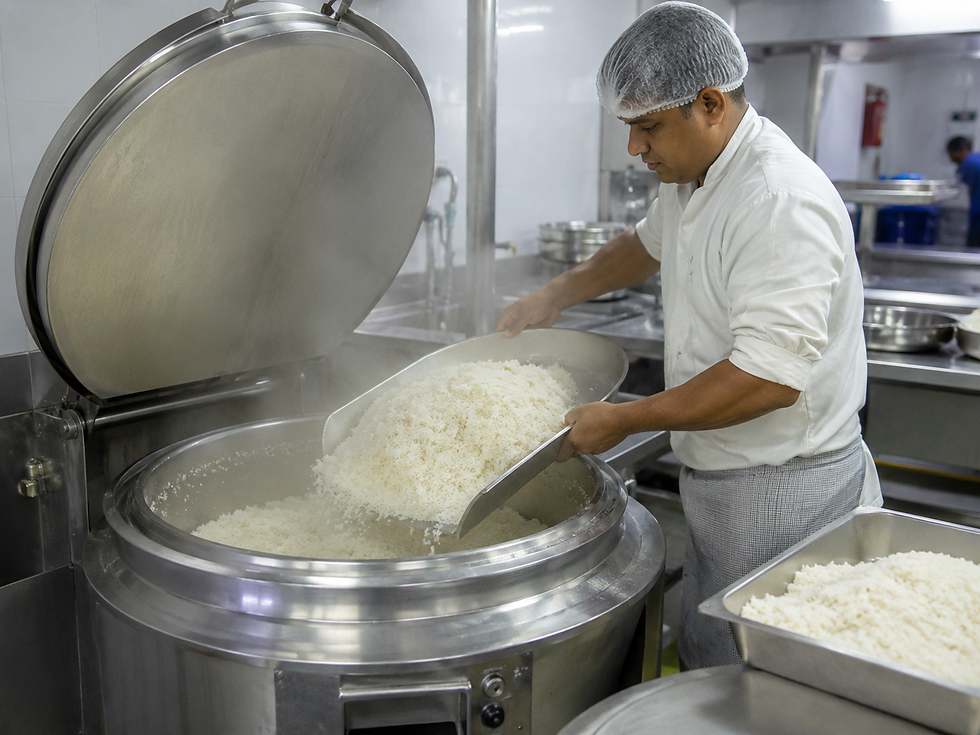
Why Bulk Rice Cooking Needs Proper Equipment
Rice is one of the most commonly served food items in commercial kitchens, but producing large quantities consistently can be challenging without dedicated equipment. In restaurants, hotels, cafeterias, catering units, and institutional kitchens, rice must be cooked in the right texture, moisture level, and quantity every single day. Even small variations in cooking quality can affect the overall dining experience and customer satisfaction.
Traditional cooking methods often require constant monitoring, manual water measurement, and frequent stirring. These processes increase labor requirements and create opportunities for inconsistency between batches. A commercial rice boiler simplifies the entire process by providing a controlled cooking environment designed specifically for large-scale rice preparation.
By maintaining proper heat distribution and cooking conditions, a rice boiler helps achieve uniform results regardless of batch size. This consistency is particularly important for businesses that serve hundreds or even thousands of meals daily. Whether preparing steamed rice for a restaurant, biryani rice for catering orders, or daily meals for a canteen, a rice boiler helps maintain quality standards across every serving.
Another important advantage is workflow management. Kitchen staff no longer need to dedicate significant time to supervising rice preparation. Instead, they can focus on food preparation, plating, inventory management, and other operational tasks while the rice boiler handles bulk cooking efficiently. This improves overall kitchen productivity and allows teams to work more effectively during busy service periods.
Practical Benefits for Daily Operations
A commercial rice boiler contributes directly to smoother kitchen operations by making one of the most frequently prepared food items easier to manage. During peak lunch and dinner hours, kitchens often face pressure to serve large numbers of customers within a limited timeframe. Having a dedicated rice cooking solution helps eliminate production delays and ensures rice is ready when needed.
One of the key operational benefits is faster batch production. Large quantities of rice can be cooked at once, reducing the need for multiple cooking cycles and helping kitchens meet demand more efficiently. This is especially valuable in businesses where rice is served with almost every meal.
Rice boilers also support better resource utilization. Proper heat retention and controlled cooking can help reduce fuel or energy consumption compared to traditional methods. Over time, this can contribute to lower operating costs while maintaining production capacity.
Hygiene is another major consideration. Since cooking takes place in a dedicated enclosed vessel, there is less exposure to external contaminants. The structured cooking process also reduces unnecessary handling, supporting cleaner food preparation practices.
For canteens, hostels, educational institutions, hospitals, factory kitchens, and community dining facilities, where rice demand is both high and predictable, a commercial rice boiler helps maintain uninterrupted service while reducing workload on kitchen staff.
Additional day-to-day benefits include:
Consistent rice quality across batches
Reduced cooking supervision requirements
Faster meal preparation during rush hours
Improved kitchen organization
Better utilization of labor resources
Reduced chances of overcooking or undercooking
Easier handling of large-volume production
More efficient use of cooking space
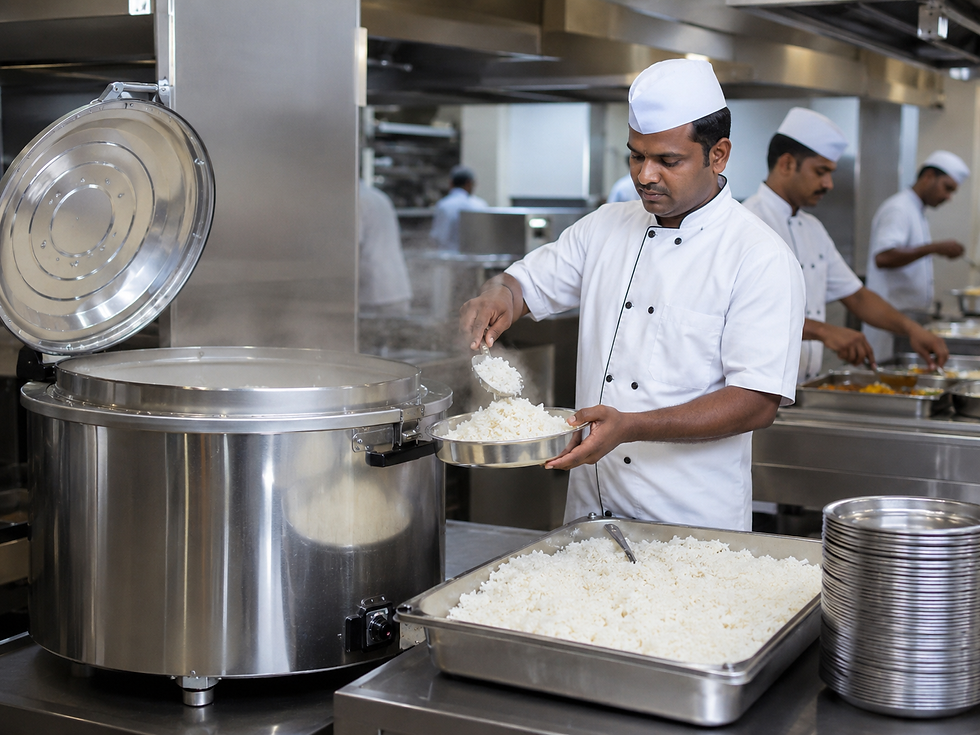
What Buyers Should Check
Selecting the right rice boiler requires more than simply choosing the largest available model. The ideal equipment should match the kitchen's daily production requirements, available utilities, and operational workflow.
Capacity is one of the first factors to evaluate. Buyers should estimate daily rice consumption and expected future growth before selecting a unit. Choosing a boiler that is too small may create production bottlenecks, while an oversized unit may lead to unnecessary operating expenses.
Material quality is equally important. High-grade stainless steel construction improves durability, corrosion resistance, and food safety. Since commercial kitchens operate continuously, equipment must withstand heavy daily usage while maintaining structural integrity.
The lid design should provide secure heat retention and easy access for loading and unloading rice. Proper insulation and sealing can improve cooking efficiency and reduce heat loss during operation.
Water management features should also be considered. Efficient drainage systems help simplify cleaning and maintenance while supporting better hygiene practices. Easy water removal can significantly reduce downtime between cooking cycles.
Buyers should evaluate the heating system based on their kitchen setup. Depending on operational requirements, rice boilers may be available in gas-fired, electric, or steam-based configurations. The most suitable option depends on utility availability, energy costs, and production volume.
Cleaning convenience is another important factor. Equipment with smooth internal surfaces, accessible components, and user-friendly design can reduce cleaning time and support hygiene compliance.
Additional considerations include:
Daily meal volume
Available kitchen space
Utility connections
Energy efficiency
Safety features
Maintenance requirements
Future expansion plans
Ease of operation for staff
A careful evaluation of these factors helps ensure that the selected rice boiler delivers reliable performance and long-term value.
Local Advantage for Delhi NCR Businesses
For commercial kitchens operating in Delhi, Noida, Gurgaon, Faridabad, Ghaziabad, and surrounding NCR regions, sourcing equipment locally offers several practical advantages beyond the initial purchase.
Every kitchen has unique requirements based on menu type, customer volume, available space, and operational schedule. Local consultation allows buyers to discuss these requirements in detail and receive recommendations based on actual cooking needs rather than generic product specifications.
Working with a nearby supplier also improves communication throughout the buying process. Questions regarding capacity selection, installation requirements, utility compatibility, and operational planning can be addressed more quickly and efficiently.
Businesses often benefit from faster support, easier coordination, and better accessibility when purchasing equipment from within the region. This can be especially valuable for new restaurants, expanding cloud kitchens, institutional kitchens, and catering businesses that need guidance during equipment selection.
Rather than recommending a standard model for every customer, we focus on understanding serving volume, menu requirements, and production goals before suggesting a suitable rice boiler. This approach helps prevent under-capacity purchases, unnecessary operating expenses, and future production limitations.
Our objective is to help commercial kitchens invest in equipment that aligns with their operational needs, supports efficient food production, and contributes to long-term business growth. By selecting the right capacity and configuration from the beginning, businesses can achieve better productivity, smoother workflow management, and more consistent food quality across daily operations.
Challenges Commercial Kitchens Face Without a Rice Boiler
Rice may appear simple to prepare, but producing large quantities consistently can become difficult in a busy commercial kitchen. When rice is cooked using traditional pots and multiple burners, kitchens often experience uneven batch quality, inconsistent texture, and unnecessary staff involvement.
Some common challenges include:
Uneven rice texture between batches
Increased monitoring during cooking
Delays during peak meal service
Difficulty handling large-volume orders
Higher risk of food wastage
Additional burner usage and kitchen congestion
A dedicated rice boiler helps solve these operational challenges by creating a more structured and predictable rice production process.
How Rice Quality Influences Customer Satisfaction
In many restaurants and food service businesses, rice is served with nearly every meal. Customers may overlook perfectly cooked rice when it is good, but they quickly notice when it is sticky, dry, hard, or overcooked.
Consistent rice quality contributes to:
Better dining experiences
Improved food presentation
Stronger customer retention
Positive food reviews
Higher perceived meal quality
Whether serving thali meals, South Indian dishes, North Indian cuisine, buffet meals, or institutional food, maintaining rice consistency helps strengthen overall food standards.
Suitable Rice Boiler Applications Across Food Segments
Commercial rice boilers are used across a wide range of food service operations because of their ability to simplify large-scale rice production.
Educational Institutions
Schools, colleges, and universities often serve hundreds of students daily. Rice boilers help maintain meal schedules while supporting large-volume cooking.
Healthcare Facilities
Hospitals require consistent meal preparation throughout the day. Rice boilers help support efficient food production for patients, visitors, and staff.
Religious and Community Kitchens
Temples, gurudwaras, community centers, and charitable kitchens frequently prepare meals for large gatherings. Rice boilers help manage these requirements efficiently.
Corporate Food Service
Large office cafeterias and industrial dining facilities can use rice boilers to support daily employee meal programs.
Event Catering Operations
Wedding caterers and event management companies benefit from the ability to prepare rice in bulk without compromising quality.
Signs That Your Kitchen Needs a Commercial Rice Boiler
Many businesses continue using traditional cooking methods even after production volume has increased significantly.
You may need a rice boiler if:
Rice is cooked multiple times every day
Staff spend excessive time monitoring rice
Customer volume is increasing regularly
Buffet operations require continuous rice availability
Large catering orders are becoming common
Existing cooking methods are slowing kitchen workflow
Investing in dedicated rice cooking equipment at the right stage can help prevent operational bottlenecks and improve service efficiency.
Frequently Asked Questions (FAQs)
What is a commercial rice boiler?
A commercial rice boiler is specialized kitchen equipment designed to cook large quantities of rice efficiently while maintaining consistent texture and cooking quality.
Who should use a commercial rice boiler?
Restaurants, hotels, canteens, hospitals, hostels, catering businesses, cloud kitchens, educational institutions, and industrial cafeterias commonly use rice boilers.
Can a rice boiler cook different types of rice?
Yes. Most commercial rice boilers can be used for basmati rice, steamed rice, jeera rice, pulao rice, buffet rice, and other commonly served rice varieties.
How does a rice boiler improve kitchen efficiency?
It reduces manual supervision, simplifies large-batch cooking, improves consistency, and frees kitchen staff to focus on other preparation tasks.
What capacity rice boiler should a restaurant choose?
Capacity should be selected based on daily rice consumption, customer volume, and future business growth requirements.
Is a rice boiler suitable for catering businesses?
Yes. Catering businesses benefit significantly because they often need to prepare large quantities of rice for weddings, corporate events, and social gatherings.
Does a rice boiler help reduce food wastage?
Proper cooking control and batch consistency can help reduce overcooked, undercooked, or spoiled rice, minimizing unnecessary waste.
What material is best for a commercial rice boiler?
Stainless steel construction is generally preferred because it offers durability, corrosion resistance, food safety, and easy cleaning.
How often should a rice boiler be cleaned?
The unit should be cleaned after each use and inspected regularly to maintain hygiene, efficiency, and long-term performance.
Why is a rice boiler a good investment for commercial kitchens?
Because it improves consistency, reduces labor requirements, supports bulk production, and helps kitchens manage daily meal service more efficiently.


Comments